Search This Blog

Showing posts with label real estate. Show all posts

Friday, March 2, 2012

Warren Buffett’s Investment Advice Is To Buy Houses


Warren Buffet was on CNBC a few days ago and he said that he would buy "a couple hundred thousand" single family homes if it were practical to do so.

Let's break down what it means to own a property right now in San Diego. First of all we need to look at the historic prices of houses here. Please see the Case-Shiller chart below of the HPI (House Pricing Index) from 2000 until 2010;


Unfortunately, I could not find a chart that was updated up to 2012 from 2000 but I did find this chart that just came out with Case-Shiller data that shows where the market has gone from 2005 and on.

As you can see, the prices have dipped since the middle of 2010. Right now, house prices are roughly the level that they were at in the middle of 2002. Many people think that if they buy a house right now, it's as if they bought it in 2002, but most people forget that interest rates in mid 2002 were at about 7% for a 30 year fixed. Our current interest rates are below 4% for a 30 year fixed or 40% less than 2002 rates. So if you buy a house to live in, it will cost you a little more than half the price it did then. What that translates to is almost half the mortgage payment. For someone buying a property to live in, this is great news.

If you are buying a property as an investment, right now is a great time as well. For the past decade we have seen a mere 1% increase per year in rent since 2002 (according to commerce statistics, adjusted for inflation). I believe that the rental market has been depressed because it was so easy to buy a property during the "boom" time of real estate, that is when vacancy rates went up in San Diego. When the "bust" of real estate came, we saw young adults not being able to afford to live on their own anymore and this kept the vacancy rates up. According to Peggy Alford, president of Rents.com, more than 1.2 million of them moved back with their parents from 2005 until 2010 and many others doubled up together. In order to curb the depressed demand for rentals, landlords had to provide rent concessions such as a period of free rent in order to win leases. Now that the economy has started its recovery, many of these young adults are starting to look for a place to live again as renters rather than owners. They have seen so many of their friends and family suffer from foreclosures and short sales. The memory of the heartache is fresh in their minds.

As good as this all sounds for the rental market, the predicament in which we find ourselves is that we are in the bottleneck in financing. If you are one of the select few that qualify for financing, you are able to take advantage of this situation. Here are a couple of examples of the deals that I have recently funded;

Studio Condo in West Point Loma
$71,000 - Purchase Price
$255 - Monthly HOA
$74 - Monthly Taxes and Insurance
$1,050 - Rent
---------------------------------------------
$721 - Monthly Positive Cash Flow
12.2% Return on Invested Funds

3 Unit Property in Lakeside
$156,000 - Purchase Price
$30,000 - Rehab Costs
$162 - Monthly Taxes & Insurance
$400 - Monthly Utilities
$2,875 - Monthly Rent
---------------------------------------------
$2,313 - Monthly Cash Flow
14.5% Return on Invested Funds

These are the two best examples of great cash flow properties. Although these were purchased with cash, if one were to get financing on these properties, the return would increase.

http://sequ.com

Thursday, December 1, 2011

Completed Rehab in Spring Valley

If you are reader of my blog, you will know that our main business is hard money. When I do a hard money loan, I am always thinking of the worst case scenario; that one of my clients is not going to finish the job and I'm going to have to complete the rehab in order to sell the property or rent it out.

I think that everybody needs to put their money where their mouth is so what I decided to do is to buy a distressed property and do a rehab project myself from A-Z. Here is the deal that I put together;

$262,000 - Purchase Price
$49,258.25 - Construction Costs
$449,000 - List Price


The property is a 2,642 square foot single family home. This house consists of 5 bedrooms, 3 bathrooms and an office/optional bedroom. The property was built in 1997 but was very abused since it was built. This lot is zoned RS4 meaning it is zoned for four units. The house has a detached garage that has been converted into a 2 bedroom 1 bath house that can be easily converted back into a garage. This property has an incredible 270 degree view as well.

This property sits on a 55,000 square foot lot (1.27 acres). Most of the time when I see that there is a property with such a large lot, the case is that the lot is not buildable. This particular lot is graded and sits below grade of this house. In theory, if you were to build another house on that lot, you would not be side by side with your neighbors. I like these types of properties because the buyer has the opportunity to possibly subdivide in the future and either build another house or sell the lot. The lot that is attached to this house would sell for $50,000 right now but much more in the good times. This is a potential retirement plan for the person that decides to buy this house.

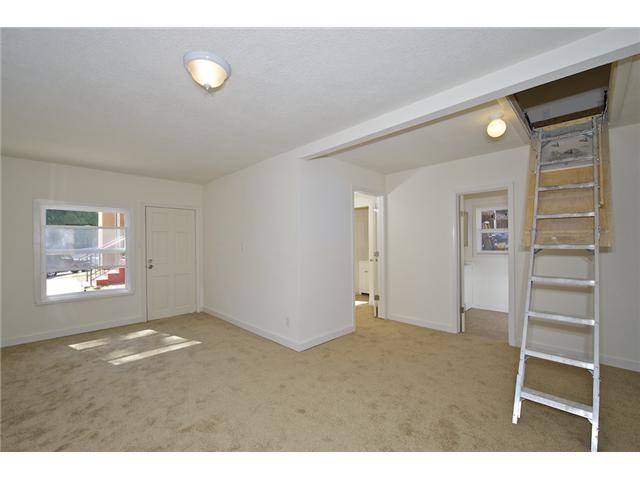
Here are some pictures of the completed product;


http://sequ.com

Wednesday, October 12, 2011

Completed Flip in La Mesa

A few months ago we took on a project to flip ourselves. Although I am in the hard money business and don't really take on many flips, when a "home run" property comes up, I can't help myself but to latch on to it (this was one of those deals).

The property was purchased for about $370,000, we put about $70,000 or work into this place. The property went on the market for $650,000 about a month ago and is in escrow now. 

I'm going to keep this blog posting short because the last one about this property was fairly long winded. 

Please see the completed pictures below; 


Wednesday, June 8, 2011


Winners of the rental economy
 May 25, 2011: 5:00 AM ET


Members of the Rent is Too Damn High Party beware! Residential rental prices are on the rise. Here's who wins in the new non-ownership society.

FORTUNE -- There are still many factors discouraging even the most savvy homebuyers from purchasing a home, but a new class of renters is expected to bring a bright spot to the troubled U.S. real estate market. Prices for rental apartments are expected to rise nationally – by approximately 4.5% in 2011 and up to another 3% in 2012, according to Rent.com.


During the housing boom between 2001 and 2005, prices for rentals fell by nearly 10% as easy credit offered by banks lured many newcomers to homeownership. Since the bust of the housing market, rents have more than made up those declines as more people now question the financial merits of homeownership or simply can't get approved for a mortgage. From 2006 to 2009, rental prices on average increased by more than 15%, according to Moody's Analytics economist Andreas Carbacho-Burgos. Nationwide, the average rent today is $1,360 a month.


Experts predict rents will continue rising.

Christina Aragon, director of strategy and consumer insight of Rent.com, says this is being driven by demographic changes coupled with an improving economy and ongoing foreclosure problems hampering the market for single-family homes. Much of the demand for rentals will likely come from younger people who tend to rent rather than buy. The economic recession pushed many jobless twenty- and early thirty-somethings to crash with friends and parents, but Aragon expects that the improving job market will get them to find their own place. What's more, the number of people aged 25 to 34 is forecast to grow 1.4% per year through 2013, helping drive demand further.

Paying more to the landlord might be bad news for renters, but it could signal that better days are ahead for the overall housing market. Here are a few winners of our burgeoning rental economy.

Builders and developers

Since the bust of the housing market, residential construction has dropped to record lows. But that is poised to change as builders and developers have already begun trying to cash in on higher demand for rental apartments.

Charles Brindell, chairman of the National Association of Home Builders' Multifamily Leadership Board, says he expects apartment construction to pick up to at least 160,000 units this year, mostly in urban areas along the East Coast. This would be significantly higher, given that construction since 2009 has totaled less than 90,000 a year – the lowest in 50 years.

Brindell, also CEO of a Texas-based firm that invests and develops apartment communities, says he's bullish because of the improving job prospects for younger workers. Brindell's Mill Creek Residential Trust is planning to build 3,000 apartment units this year, mostly in the Northeast including the Boston area, Long Island, New York, and Virginia.

However, while a burst of activity in multi-family homes is certainly good news for the construction sector, it is by no means enough to return the homebuilders to their previous level of activity. The NAHB index that tracks builder confidence remains low at 16 -- it was as high as 72 in 2005.

Real estate investment trusts (REITs)

It's not that homeownership is dead, but people are certainly renting more and investors have picked up on the higher demand.

REITs, which invest in commercial properties from office buildings to rental apartments – have outperformed the S&P500 since the financial crisis. In 2010, investments in apartment complexes led gains in the overall REITs market with total returns at 47%. Returns for the overall REITs market was 28%, markedly higher than the S&P500 that saw returns of 15%.

Last month, real estate investment trusts Equity Residential (EQR), headed by real estate mogul Sam Zell, and AvalonBay Communities (AVB) -- both among the nation's biggest apartment owners -- posted higher year-over-year revenue as the companies raised rents.

For Equity Residential, average rent rose 3.6% to $1,400 and occupancy rose to 95% from 94.6% the previous year on properties the company operated for a year or more. Revenue rose by 4%. And AvalonBay reported that revenues jumped 3.7% and average monthly rental rates ticked up slightly quarter over quarter from $1,873 to $1,879.

As of Monday, total returns for REITs were 8.73% (with about seven months to go), outperforming the Russell 2000, NASDAQ and S&P 500. Investments in apartment complexes continued contributing much of the gains.

Overall U.S. housing market

Given that many homeowners are still trying to clean up their messy finances, it might be hard to see how higher rents could benefit the overall U.S. housing market. In theory, at least, renting could become so expensive that it costs less to buy a house and make monthly mortgage payments.

In fact, that's happening already, even if it hasn't yet translated to a return to homeownership. In Moody Analytics' latest list of rent ratios for 54 U.S. metropolitan areas, 29 cities fell into the  "better to buy" category. With many experts predicting that home prices have further to fall this year and with higher expectations for rentals, more cities could end up on the buy side of the buy-versus-rent calculator.
But much of that will likely depend on huge hurdles weighing on the housing market – namely, record foreclosure rates, high unemployment and tighter lending standards for new mortgages. Areas that continue to experience high foreclosure rates and widespread unemployment, such as Florida and Arizona, might find it more affordable to buy than rent. Yet renting will likely be king in more urban areas with more employment opportunities, such as New York and Seattle.